THI Solar
Solar Panels & Battery Storage for Your Property
Explore a system designed around your roof, electricity use and budget. Serving properties within approximately 70 miles of NG17, subject to postcode confirmation.
We reply as soon as we can.
Credentials
Check who you’re dealing with
Legal entity
Top Home Improvements Ltd, company number 14266220. Check it at Companies House.
Who does what
Who you contract with and who installs
Your contract is with Top Home Improvements Ltd. That company is responsible for the quotation, the installation and what happens afterwards.
Before you sign, you should know who is coming to your home, who they work for and who checks their work. We’ll tell you, whether the people on your roof are direct employees or subcontractors.
Benefits
What a well-designed system can do
What you get out of solar depends on your home. A system designed around it gives you the best chance of it working for you.
Use your own electricity
Electricity generated on your roof can run your home while the sun is out, reducing what you draw from the grid during those hours.
Keep more for later
A battery can store surplus for use in the evening. Whether one is worthwhile depends on when you use power and on your tariff.
Get paid for what you export
If you’re eligible, a supplier can pay you for what you send to the grid under the Smart Export Guarantee.
Know what you’re buying
You get a design, an output estimate and an itemised quotation before you decide, with the assumptions in writing.
What we install
The equipment
The right combination comes out of the design. Your quotation names the make and model of everything being fitted.
- Solar panels, sized and laid out for your roof
- Inverter, which converts what the panels generate into power your home can use
- Battery storage, with the panels or added later
- Monitoring, so you can see what the system is doing
Process
From survey to aftercare
- EnquiryA short form or a call. “Not sure” is a fine answer to anything technical.
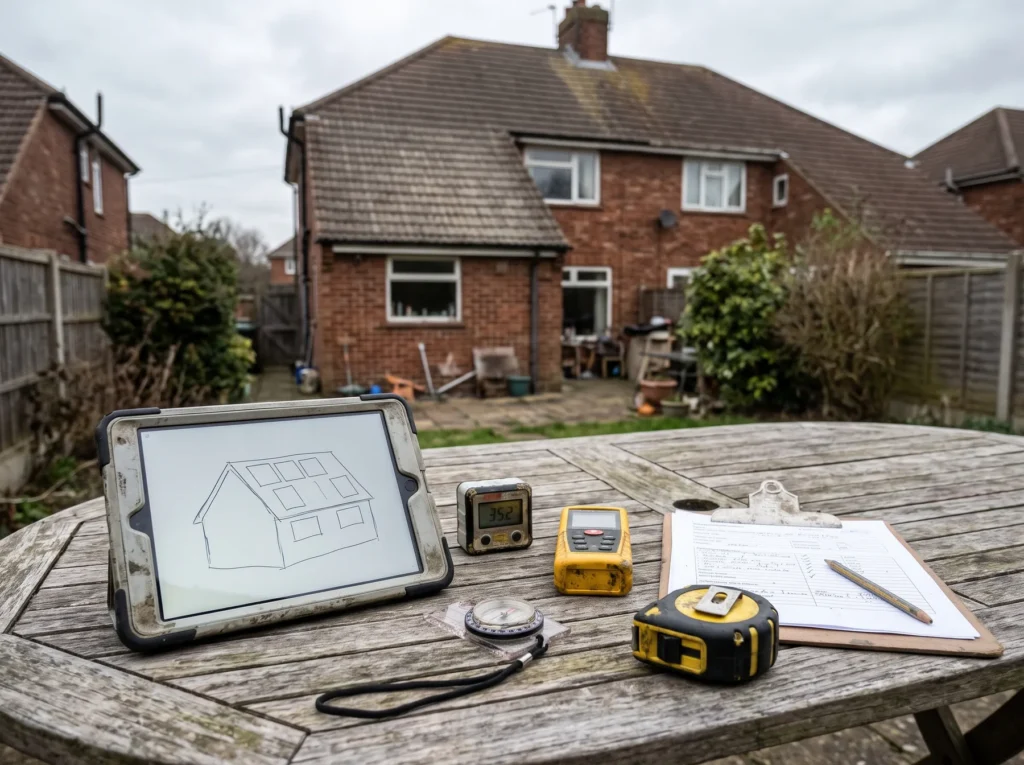
- SurveyWe look at your roof, shading, electrics and consumption.
- Design and performance estimateA layout and an estimate of output for your home. An MCS estimate is guidance for the first year, not a guarantee.
- QuotationWritten and itemised, with the VAT treatment and what isn’t included.
- Contract and cancellation rightsClear terms before you’re bound. For a contract made at your home or at a distance, you normally have 14 days to change your mind.
- Network and planning checksWe check what your network operator needs, and whether anything about your property affects planning. We never promise a connection date.
- InstallationScaffolding where needed, then fitting to the agreed design. More on each stage.
- Commissioning and certificateThe system is tested and switched on, with the certificates that apply to your installation.
- HandoverHow to use and monitor the system, and a pack of your documents.
- AftercareIf something isn’t right after the installation, contact us using the details on this site.
Pricing factors
What affects the price
Roof
Its shape, condition and pitch, and how easy it is to work on.
System size
How many panels the roof and your use justify.
Battery
Whether you want one, and what capacity.
Scaffolding
Access varies a lot from house to house.
Inverter
The type suited to your roof layout and any battery.
Network work
Anything your network operator or supply requires.
Finance
Finance isn’t offered through this website. If you’re offered finance by anyone, check the lender, the total cost and your cancellation rights before you sign.
Prices follow the survey
We don’t publish a “from” price, because a figure that leaves out size, battery, VAT and scaffolding doesn’t tell you much. You get a written, itemised quotation after your survey. Read more about cost and savings.
Savings and payback
Why you won’t see a headline saving here
What solar saves depends on your system size, how much of the electricity you use at home, your tariffs, your export rate, and whether you have a battery. Two neighbours can get very different results.
So we don’t quote a single figure or a single payback period. Your own estimate will show its assumptions, and it will say whether it includes a battery.
Be wary of any firm that promises to eliminate your bills.
Suitability
Panels, battery or both?
Panels only
Often a sensible start if you’re home in the day or can move your use into daylight hours. Surplus is exported.
Panels, with a battery later
Design for it now and add it when it makes sense. Ask how the inverter choice affects this.
Panels and a battery together
Lets you use more of what you generate after dark. We estimate your own use with and without storage.
Is my home suitable?
- Roof. Direction, pitch, shading and condition all matter. Not sure? Tell us anyway.
- Permission. You need the roof owner’s agreement. If you rent or live in a flat, your landlord or freeholder’s permission is needed. We’d rather talk it through than turn you away.
- Planning. Usually not needed for a house in England, subject to the rules and your property. Listed buildings, conservation areas, flats and Wales can differ, so we check at survey.
- Meter. Export payments need a meter that records exports, typically a smart meter.
Export payments (Smart Export Guarantee)
Under the Smart Export Guarantee, suppliers pay for electricity you export. Each supplier sets its own rate, and it must be above zero. You need an installer and installation certified under MCS or an equivalent scheme, and a meter that records exports.
Rates change, so we don’t quote one here.
VAT
Qualifying solar and battery installations in homes are zero-rated until 31 March 2027, and 5% from 1 April 2027. See VAT Notice 708/6.
Your quotation states the VAT treatment. VAT rules checked 3 November 2026.
Warranties and protection
Four different things, and who stands behind each
These often get lumped together. They aren’t the same, and you should see each one in writing.
| Cover | What it is | What to ask for |
|---|---|---|
| Product warranties | From the manufacturer of the panels, inverter and battery, covering the equipment. | The manufacturer, the length and the conditions for each product, in writing |
| Workmanship cover | The installer’s own promise about the quality of the installation. | How long it lasts and what it covers, in writing |
| Insurance-backed guarantee | A third party’s cover, which may help if the installer can’t honour its guarantee. | Whether one is included, and who provides it |
| Deposit protection | How any deposit you pay is protected. | How your deposit is protected, before you pay it |
Payment and finance
Your quotation sets out what you pay and when. Finance isn’t offered through this website.
Independent evidence
What independent sources say about solar
Figures from independent organisations, not from our own installations. They’re national examples built on assumptions that may not match your home, and we don’t promise any saving.
Typical bill savings
The Energy Saving Trust estimates a typical 4.5 kWp system could cut electricity bills by about £190 to £330 a year, before any payment for exported electricity. It assumes 2,500 kWh a year of use and no electric heating.
Source: MoneySavingExpert, reporting Energy Saving Trust figures, updated 28 September 2026
What a roof here can produce
The European Commission’s PVGIS tool estimates about 965 kWh a year for each kW of panels on a south-facing, 35° roof near Sutton-in-Ashfield, and about 780 kWh on an east-facing roof. Shade and roof angle change this.
Source: PVGIS, European Commission Joint Research Centre, our search, 6 November 2026, 14% system losses assumed
What a unit of electricity costs
Under Ofgem’s price cap the average electricity unit rate is 26.32p per kWh from 1 October to 31 December 2026. Each unit you make and use yourself is one you don’t buy. The rate changes every three months.
Source: Ofgem, announced 26 August 2026
Ask for an estimate for your own roof and check what it assumes: your use, your tariff and the export rate. Estimates are a guide, not a guarantee.
Coverage
Where we install
We serve properties within approximately 70 miles of NG17, subject to postcode confirmation. If you’re near the edge or outside it, you can still enquire: we’ll flag it for a person to review and tell you honestly what we can do.
Keep reading
Solar guides
How solar installation works
Each stage, and what you receive at it.
Solar cost and savings
What decides the price and how an estimate is built.
Battery storage
Whether to fit one now, later or not at all.
FAQs
Solar questions
Do I need an MCS installer?
We haven’t found a legal requirement to use MCS certification to fit solar. MCS or an equivalent scheme is required to claim Smart Export Guarantee payments, and MCS is required for the Warm Homes Loan Scheme, and for many government schemes. You can check any installer with MCS.
What is the Smart Export Guarantee?
Suppliers pay you for electricity you export. Each sets its own rate above zero. You need an installer and installation certified under MCS or an equivalent scheme, and a meter that records exports half-hourly, typically a smart meter. It isn’t available alongside Feed-in Tariff export payments.
Is there VAT on solar and batteries?
Qualifying installations in homes are at 0% until 31 March 2027, then 5% from 1 April 2027. Batteries qualify if used only to store energy from the home’s supply or a microgeneration system. Checked 3 November 2026.
Do I need planning permission?
Usually not for a house in England, subject to the rules and your property. There are limits on how panels sit on the roof, and listed buildings and conservation areas are treated differently.
The rules changed on 27 August 2026, and flats and Wales differ. We check at survey, and the Planning Portal has the detail.
Do you tell my network operator?
Smaller systems are usually connected first and notified within 28 days of commissioning. Larger ones need an application before connection. We’ll tell you which applies.
How is the output estimate calculated?
MCS sets a method using your postcode zone, roof pitch and orientation, and shading. It comes with a statement that it’s guidance for the first year and not a guarantee.
Will it work on cloudy days?
Panels generate less in poor light. Output varies with sunlight, weather and time of year, so your estimate for your home is more useful than a general claim.
How long will it take to pay back?
It depends on system size, how much you use at home, your tariffs, your export rate and whether you have a battery. Published figures vary widely, so we’ll show you a dated method rather than one number.
Is a battery worth it?
It stores surplus for later. The benefit depends on when you use power and on your tariff. We estimate your use with and without storage so you can compare.
Can I cancel?
For a contract made at your home or at a distance, you normally have 14 days to cancel, without giving a reason. The 14 days normally run from the day the contract is made. We won’t start in that time unless you ask us to in writing. If you do and then cancel, you pay a proportionate amount for what’s been done. You lose the right to cancel only if you asked for the early start, acknowledged what it means, and the work is fully completed. Finance agreements may have separate rights. Your contract sets out the full terms.
What warranties do I get?
Product warranties, workmanship cover and any insurance-backed guarantee are separate things. Each should be shown to you with its length, provider and conditions, as in the table above.
What if THI goes out of business?
MCS requires installers on its redeveloped scheme to buy an approved financial protection product covering at least six years from installation. Ask any installer which product would cover your installation.
How do I check you?
Check the company at Companies House, and any installer at MCS Find an Installer and on the consumer code and TrustMark registers.
Can I get a grant or cheap loan?
There is no general grant for solar. ECO4 is a low-income, supplier-led scheme running to 31 December 2026. The Warm Homes Loan Scheme offers lower-rate loans through participating lenders and needs an MCS installer; it is a loan, not a grant.
I rent, or I live in a flat
You’ll need permission from your landlord or freeholder, because the roof may not be yours. Please still get in touch and we can talk it through.
How are finance offers regulated?
Firms broking credit must be authorised by the FCA or be an appointed representative of a firm that is. Finance isn’t offered through this website.
How do I know a call or text is genuine?
MCS has warned about texts using “MCS” as a sender and fake warranty-renewal calls. If you’re unsure, stop and contact the organisation using details you found yourself.
Request Your Solar Assessment
Start with your name, postcode and how you’d like us to get in touch. Anything else is optional, and “not sure” is always fine. This isn’t a commitment to buy.
We reply as soon as we can.