Loft insulation
Loft insulation after foam removal
Taking foam out can leave a roof with little or no insulation. Here’s what to think about before anything goes back: moisture first, then a specification written for the roof as it is now.
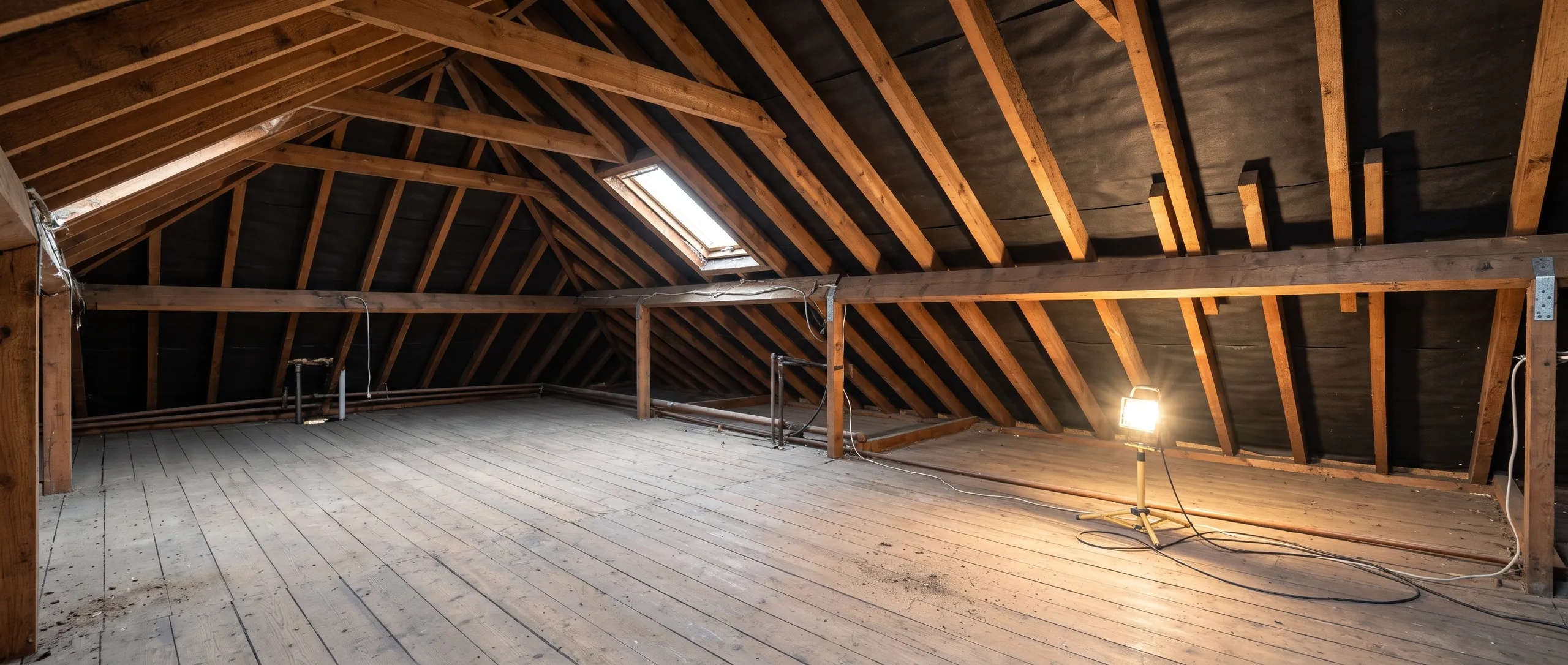
Removing the foam “will not always guarantee” that a lender will still lend, and neither will the insulation that goes in afterwards.
Replacement insulation has to be specified for the roof’s condition, after specialist advice. Please talk to your lender about what they want to see. Read what the guidance says.
In what order
From bare rafters to a finished roof
- Read the removal recordWhat was found, what was repaired and what couldn’t be reached. We’d ask to see it, even if another company did the removal.
- Check for moistureInsulating over damp timber can hide a problem again. Readings are taken and recorded before anything is covered.
- Look at the underlayIs it there, what condition is it in and does it let vapour through? This affects which layers can safely go on.
- Decide where the insulation goesCeiling level, rafter level, or both. If foam replaced your ceiling insulation, that may need to be put back. How the space is used now and in future matters.
- Write the specificationThe complete build-up, how it’s ventilated, and the U-value calculated for it, approved by a named qualified person.
- Check the rulesInsulation following foam removal isn’t obviously “solely” insulation work, so a qualified person confirms whether Building Control is involved.
SF19+ after foam?
Sometimes, not automatically
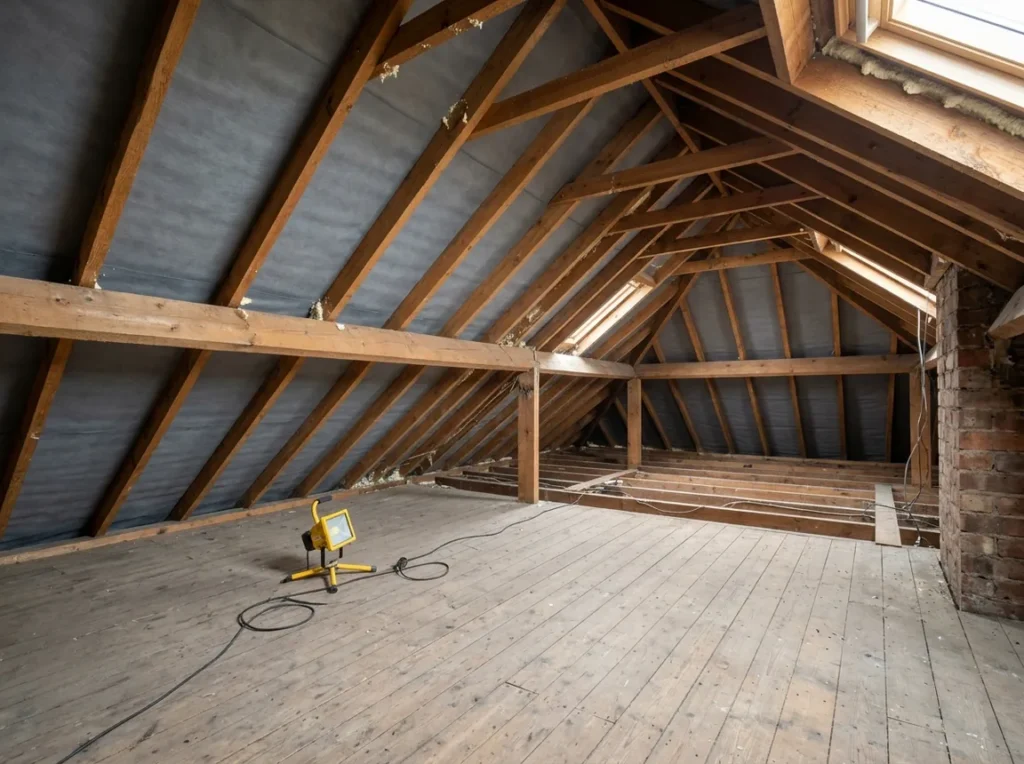
SF19+ may be part of a combined build-up on a roof where foam has come out, if a qualified person has approved a specification for it. It isn’t a default, and it isn’t normally enough by itself.
It’s a vapour control layer, so its position has to suit the roof. If traces of foam or another vapour-closed layer remain, that has to be taken into account.
In many lofts, plain mineral wool at ceiling level will be the simpler answer. We’d tell you if that’s the case.
If you’re doing both with us
One company, two separate decisions
We offer both foam removal and insulation, so you should know we have an interest in selling you both. You’re free to use us for one and someone else for the other. You should get a quotation that shows each part separately, and a removal record that stands on its own.
If you’ve still got foam in place, start here instead. Removal isn’t always needed.
FAQs
Questions after removal
How soon can I insulate after removal?
That depends on what the removal found, especially moisture. It’s better to check than to hurry. In the meantime, the home may lose more heat, so ask about timing when you’re planning the removal.
Another company removed my foam. Can you still help?
Please enquire. We’d ask to see their record and would check the roof ourselves, since we can’t vouch for someone else’s work.
Will this help me get a mortgage?
We can’t say. Ask your lender what they need. Removal will not always guarantee that a lender will lend, and insulation doesn’t change that.
I had foam removed and there’s residue left. Is that a problem?
It depends on where it is and what’s proposed next. The record should say what remains. Tell us and we’ll take it into account in the specification.
Keep reading
Related pages
How foam removal works
The stages, from survey to records.
What the completion record confirms
And what it can’t.
Condensation and ventilation
Why moisture decides so much.
Request an Insulation Assessment
Tell us if your foam has already been removed. Start with your name, postcode and how you’d like us to get in touch. “Not sure” is always fine.
We reply as soon as we can.