THI Solar
How solar installation works
From your first enquiry to aftercare: what happens at each stage, who does what, and what you should have in your hands at the end of it.
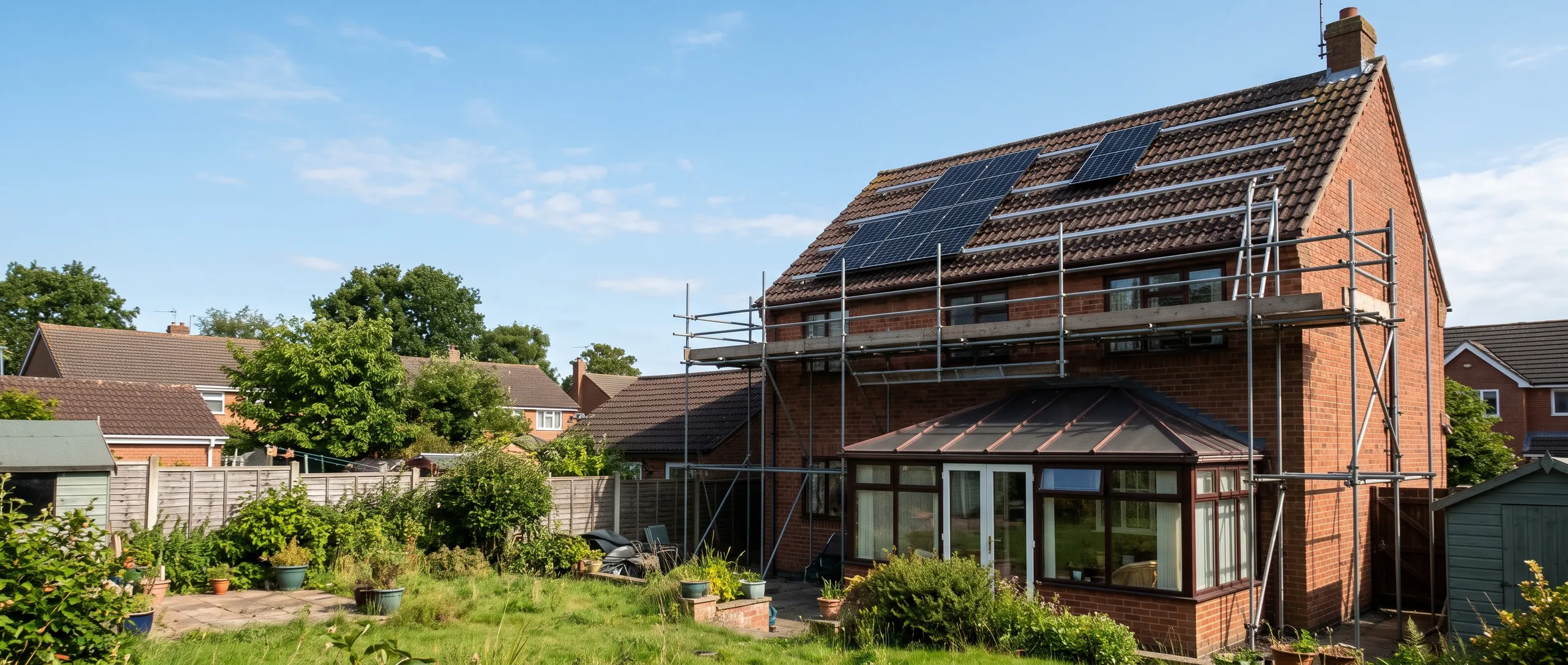
The stages
Six stages, and what you get from each
| Stage | What happens | What you receive |
|---|---|---|
| Survey | We look at the roof, shading, your electrics, the meter position and how you use electricity. | A clear view of whether panels, a battery or both are worth pursuing |
| Design | Panels are laid out for your roof, and the inverter and any battery are chosen to suit. A performance estimate is prepared for your home. | A layout and an estimate, with its assumptions shown |
| Quotation | A written, itemised price, stating the equipment by make and model, what’s excluded and the VAT treatment. | A quotation you can compare, and time to take advice |
| Installation | Scaffolding where needed, fitting to the agreed design, then electrical connection and testing. | A named contact, and notice of anything that changes |
| Handover | The system is switched on and explained. You’re shown how to monitor it and what to do if something looks wrong. | Certificates that apply, manuals and warranty documents |
| Aftercare | If you have questions or concerns once the installers have gone, contact us using the details on this site. | Who to contact, and how a concern is handled |
The survey
What we’re looking for
- The roof. Its direction, pitch, condition and the space available. A roof near the end of its life is worth dealing with first, because panels make it harder to re-cover.
- Shading. Chimneys, dormers, trees and neighbouring buildings. Shade at certain times of day affects the layout and the choice of inverter.
- Your electrics. The consumer unit, the meter and the route for cables.
- How you use electricity. A year’s usage is ideal, and a recent bill helps. Hide your account number if you share one.
- Permissions. Whether you own the roof, and whether the property is listed or in a conservation area.
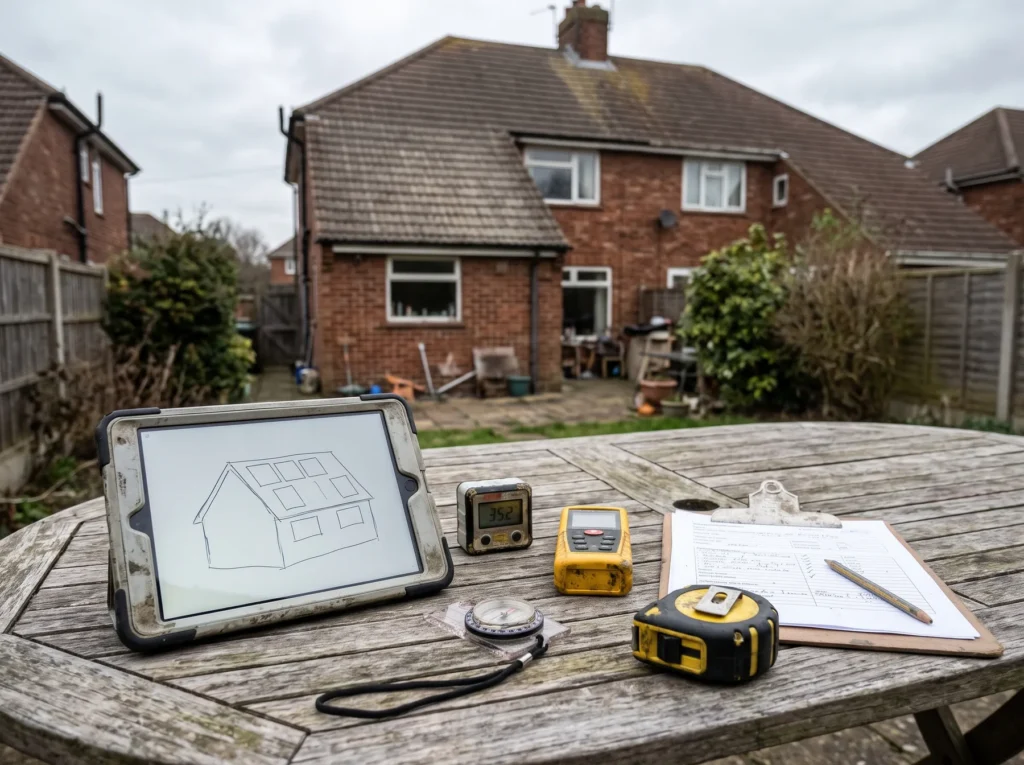
The estimate
How a performance estimate is built
MCS sets the method for its certified installers. It uses your postcode zone, roof pitch and direction, and shading, and it estimates how much of the generation you’re likely to use at home, with and without a battery.
An MCS estimate comes with a statement that performance can’t be predicted with certainty, and that the figure is guidance for the first year, not a guarantee. Treat any estimate that doesn’t say so with caution.
Before installation
The checks that can change the plan
Your network operator
Smaller systems are usually connected first and notified within 28 days of commissioning. Larger ones need an application before connection. A battery can change which applies. We never promise a connection date.
Planning
Usually not needed for a house in England, subject to the rules and your property. Listed buildings, conservation areas, flats and Wales can differ, and the rules changed on 27 August 2026. We check at survey.
Your right to cancel
For a contract made at your home or at a distance, you normally have 14 days to change your mind. We won’t start within that time unless you ask us to in writing.
Who does the work
Who is on your roof, and who checks it
Your contract is with Top Home Improvements Ltd, whoever is carrying out the work. Before you sign, you’ll be told who’s coming to your home, who employs them and who checks their work.
If any stage is subcontracted, we’ll say so. THI stays responsible for it.
Keep reading
Related pages
Solar cost and savings
What decides the price, and how to read a savings estimate.
Battery storage
Whether to fit one now, later or not at all.
Request Your Solar Assessment
Start with your name, postcode and how you’d like us to get in touch. Anything else is optional, and “not sure” is always fine. This isn’t a commitment to buy.
We reply as soon as we can.