THI Foam Removal
Professional Loft Spray Foam Removal
Request an assessment of your loft, a clear removal quotation and details of the completion documentation supplied.
Loft spray foam removal in England and Wales.
We reply as soon as we can.
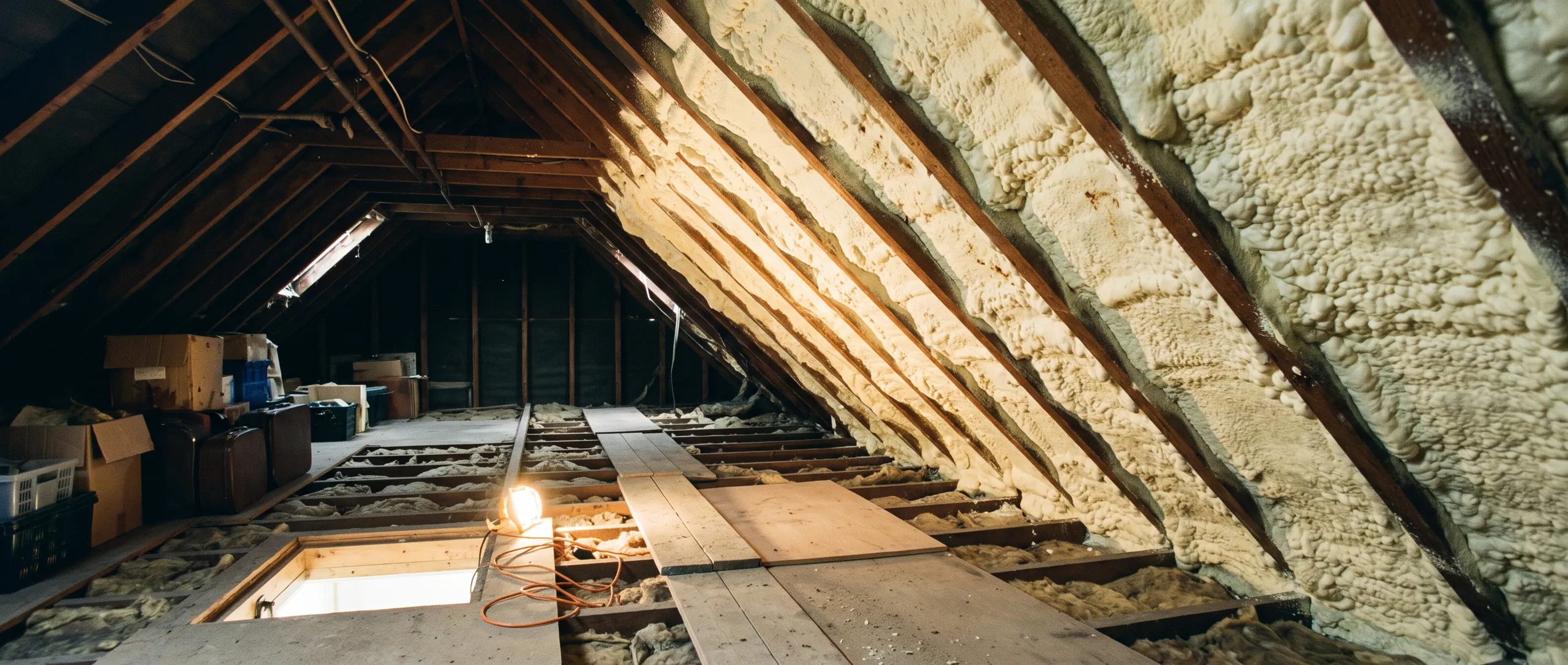
Start here
Do you need to remove it?
Not always. Removal isn’t right for every home, and you shouldn’t decide on the strength of a contractor’s word, including ours.
The government’s guidance on spray foam says spray foam can be used effectively in many settings, but isn’t always right for some homes and may need to be fixed or removed. It advises you to do two things before you decide:
- Take advice from a specialist surveyor experienced in spray foam. The guidance says only they can tell you whether the foam should be removed.
- Talk to your lender. In the guidance’s words, removing the foam “will not always guarantee that they will still lend”.
Finding a specialist
- Property Care Association: find a specialist, the route the government guidance points to
- RICS, the professional body for chartered surveyors
Our survey visit is for scoping the work and quoting. It isn’t an independent surveyor’s assessment. We’re happy to work with your specialist’s report.
Your situation
What to do first
Selling
Find out what the buyer’s surveyor or lender has actually asked for, and speak to your conveyancer.
Remortgaging
Ask your lender or broker what they need before you pay for any work.
Equity release
Ask your adviser and provider first, and take your time. We’ll have a person talk this through with you.
Inherited a home
Look for the installer’s paperwork, and take specialist advice before making any decision.
Buying
Ask your own surveyor and lender. Your conveyancer can advise on what to raise with the seller.
Poor install or no paperwork
Check for a guarantee, a scheme or a quality mark. The installer or manufacturer should be able to supply paperwork retrospectively.
Someone phoned or visited you
Don’t agree to anything on the spot, and don’t pay in advance. Get independent advice. See our advice on cold callers.
Benefits
If you do go ahead, what you get
A clear scope
A written quotation saying what will be removed, what won’t and what could change the price.
A visible roof
With foam gone, timbers and underlay can be inspected where they can be reached, and what’s found is recorded.
A record of the work
A completion record you can show to whoever needs it, stating plainly what it does and doesn’t confirm.
A plan for afterwards
Removal can leave the roof with little insulation, so we talk through what goes back in and how it’s ventilated.
Process
How removal works
- Your requestTell us about the property and your situation. If you’re not sure what type of foam you have, say so.
- Photos and enquiry reviewPhotos help if you have them, but they’re optional. We won’t diagnose your roof from a photo.
- Survey visitFor scoping and quoting. It isn’t an independent assessment.
- Written quotationA clear scope, with price factors and payment terms. You shouldn’t be asked for full payment upfront.
- Asbestos pre-check and method statementCompleted before work starts, and shared with you.
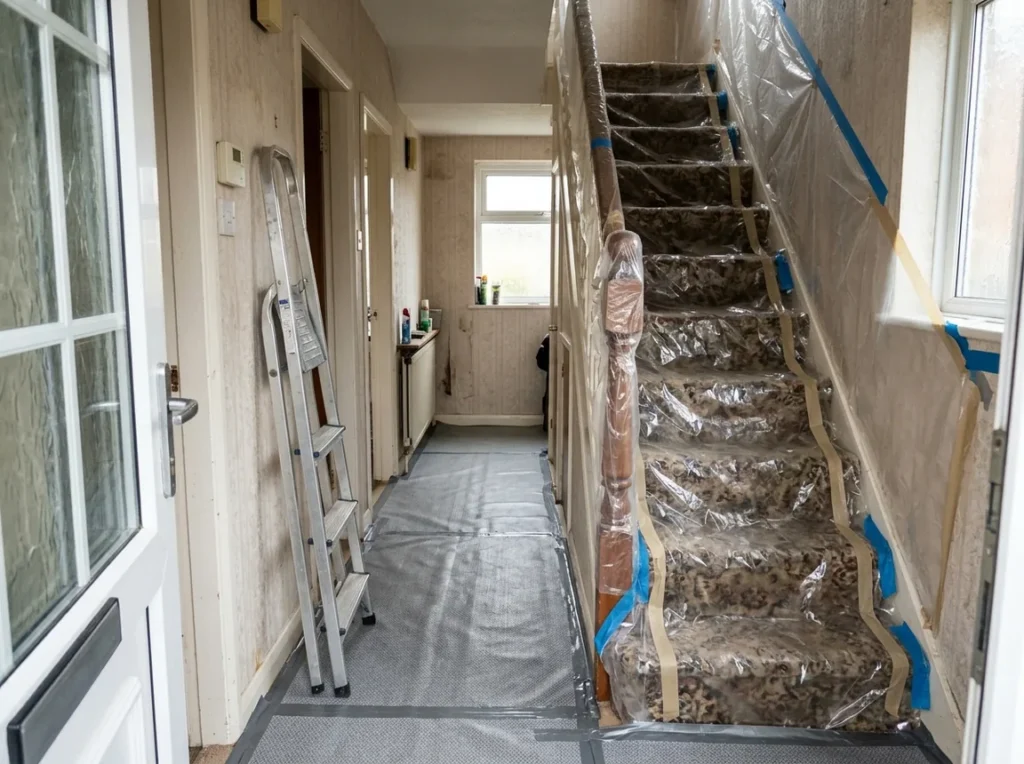
- ProtectionYour home, loft access route and belongings are protected, with dust controlled.
- RemovalThe agreed areas only, by a method suited to the foam and the roof.
- Inspection and recordsTimbers, underlay and fixings are inspected where accessible and the findings recorded, with photographs.
- WasteHandled by a registered carrier, and you receive the transfer note.
- ReinstatementWhat goes back, if agreed, including insulation and ventilation.
- Completion recordYour written record of what was done, explained below.
- AftercareIf anything concerns you after the work, contact us using the details on this site.
Foam types
Open-cell and closed-cell
Open-cell
Softer and spongier, and more vapour-permeable.
Closed-cell
Denser and rigid. Often used to stabilise a roof or improve airtightness. Where it’s been applied directly to tiles, removal may also involve roof work.
Which type you have, and whether it was applied to underlay or directly to the tiles, changes the work involved. If you don’t know, that’s normal: we identify it at the survey.
Independent evidence
What independent sources say about spray foam
Spray foam isn’t automatically a problem, and removing it isn’t always the answer. These are the independent sources we point people to first.
Who can say if it should come out
The government’s guidance says: “Only specialist surveyors experienced in spray foam application can tell you if the foam should be removed.”
Source: GOV.UK, Spray foam insulation: remediation, removal and lending, published 22 October 2026
Removal and lending
The same guidance warns: “Removing the foam will not always guarantee that they will still lend, and improper removal could lead to further issues.” Lenders differ, so talk to yours first.
Source: GOV.UK, Spray foam insulation: remediation, removal and lending, published 22 October 2026
Why surveyors look closely
Which? explains that by blocking ventilation, spray foam “can result in severe condensation in the roof space”, which “can lead to rot in the roof timbers, which can go undetected for many years.” It doesn’t mean every roof with foam is damaged.
Source: Which?, Spray foam insulation explained, page dated 6 October 2026
Independent advice
RICS advises homeowners to seek independent expertise “commercially separated from the installer and manufacturer”.
Source: RICS consumer guide: spray foam insulation, checked 6 November 2026
Cold calls
Which? warns: “Beware of cold callers offering to install or remove spray foam insulation”, and says scammers often falsely claim existing foam is dangerous. Don’t agree to anything or pay in advance on the doorstep.
Source: Which?, Spray foam insulation explained, page dated 6 October 2026
We don’t decide for you whether foam must come out, and we can’t promise what any lender or valuer will accept.
Safety, protection and waste
What happens in your home
Access
We need a safe route to the loft, a workable hatch, and somewhere to park. We’ll tell you at the survey if scaffolding or roof access is needed.
Protection
Your landing, stairs and belongings are protected before work starts, and dust is contained during removal.
Asbestos pre-check
Done before any disturbance, with the outcome written into the record.
Waste
Foam waste goes to a suitable facility with a registered carrier, and you receive a waste transfer note. You can check a carrier on the Environment Agency register.
After removal
What the completion record confirms, and what it doesn’t
You’ll sometimes hear this called a certificate. We call it a completion record, because that’s what it is: a factual record of the work, not an approval.
It can confirm
- Who did the work, where, when, and which areas of the roof were covered
- The foam as found: type, location, area, and the removal method
- The condition of visible timbers, underlay and fixings when inspected, with readings and dates
- What was repaired or replaced, what residue remains, and what couldn’t be reached
- Who carried the waste, and the transfer reference
- What was reinstated afterwards
- Any assessment by a named independent surveyor, if attached
It can’t confirm
- That a lender, valuer, insurer or buyer will accept the property
- That the roof is sound beyond what was visible and measured
- That timbers will stay dry in future
- That the foam needed removing, which only a specialist surveyor can say
- That no foam remains in places that couldn’t be inspected
- Compliance with Building Regulations, unless Building Control or a competent person scheme has said so
- Any endorsement by RICS, the PCA or TrustMark
Lenders, sales and paperwork
What the official guidance says about lending
Removing the foam “will not always guarantee” that a lender will still lend. Lenders each have their own requirements, so check with yours before you commit to any work.
The government says many mortgage providers are open to lending on properties with spray foam, subject to their own requirements, and publishes a list. It can change, so we link to it rather than copy it: read the gov.uk guidance.
It helps to gather the original installation paperwork. If you don’t have it, the guidance says the installer or manufacturer should be able to provide it retrospectively.
Pricing factors
What affects the price
Foam type
Open-cell and closed-cell come away differently.
Area
How much of the roof is covered, and at what depth.
Access
Hatch size, boarding, and any scaffolding.
Timber repairs
Anything found once the foam is off.
Roof work
Sometimes needed where foam is bonded to tiles.
Waste and reinstatement
Disposal, plus what goes back in afterwards.
You get a written quotation after the survey. We don’t publish a price range on this site. Payment terms are in the quotation, and you shouldn’t pay in full upfront.
Beware cold callers
How to check any removal firm
The government warns that the growth of this sector has led to more cold calls and unsolicited offers. Some callers say your original installation was faulty. You don’t have to decide today.
Check any firm, including us
- A written, fixed quotation
- Evidence of insurance, and references
- A company number you can look up at Companies House
- A waste carrier number on the Environment Agency register
- An independent specialist’s assessment
- Payment terms with no full payment upfront
If you’ve been cold-called
- Report it to Trading Standards
- If you think your installer shared your details, you can complain to the ICO
- Get independent advice before agreeing to anything, and don’t pay in advance
Legal entity
Top Home Improvements Ltd, trading as Top Home Improvements. Registered in England and Wales, company number 14266220. Registered office: 12 Pinxton Lane, Kirkby-in-Ashfield, Nottingham NG17 8LT. Telephone: 0800 772 3430. Email: info@top-home-improvements.co.uk.
Keep reading
Foam removal guides
Selling, remortgaging and lending
Who to talk to, and in what order.
How removal works
The stages, from survey to records.
Open-cell and closed-cell
Why the type of foam changes the job.
What the completion record confirms
And what it can’t.
Cost factors
What moves the price, and warning signs.
After removal
What goes back, once moisture has been checked.
FAQs
Foam removal questions
Do I have to remove spray foam?
We have found no general legal requirement to remove it. The government guidance says foam “may need to be fixed or removed” and that only specialist surveyors experienced in spray foam can tell you whether it should be.
Who is a specialist surveyor?
The guidance points to the Property Care Association’s find-a-specialist tool, and says the surveyor should know the March 2023 inspection protocol. Look for professional membership, indemnity insurance, spray foam experience and impartiality.
Will removing it let me get a mortgage?
Not always. In the guidance’s words, removal “will not always guarantee that they will still lend”. Speak to your lender first.
Which lenders will lend?
The gov.uk guidance lists lenders it says are open to lending, subject to their own requirements. The list can change, so check it, and ask your lender or broker.
Why do lenders and surveyors worry about it?
A surveyor often can’t see the roof timbers beneath the foam. Moisture trapped in some set-ups can also lead to timber decay. Foam isn’t a problem in every roof.
What paperwork helps?
The installer’s handover pack: the pre-installation roof evaluation, hygrothermal evaluation, BBA or Kiwa certificate, installer details and guarantees.
I can’t find my installer
Check your paperwork for an insurance-backed guarantee, or the name of a scheme, certification body or quality mark. For work under government schemes since 2020, TrustMark can help find the guarantee provider.
What’s the difference between open-cell and closed-cell?
Open-cell is softer and more vapour-permeable. Closed-cell is denser and often used to stabilise roofs. Which you have, and how it was applied, affects the risk and the removal approach.
Can I remove it myself?
We haven’t found official guidance on removing it yourself. We don’t recommend it: safety, dust and waste duties all apply, and you wouldn’t have a record of the work.
What does removal involve?
A survey, an asbestos pre-check, a method statement, protection and dust control, removal, inspection, waste handling, reinstatement and records. See what the record covers.
What does the completion record show?
A factual account of the work and what was seen at the time. It doesn’t confirm that any lender, valuer or buyer will accept the property. See the full list.
How much does it cost?
It depends on foam type, area, access, timber repairs, roof work, waste and reinstatement. You get a written quotation after the survey.
How long does it take?
It depends on the foam and the roof. We’ll give you a timescale for your home after the survey.
Is there funding for removal?
We haven’t found any government funding for removal. Be cautious of anyone who says otherwise, and check the official guidance.
Someone cold-called me. What should I do?
Report it to Trading Standards. If you think an installer shared your details, you can complain to the ICO. Get independent advice before agreeing to anything, and don’t pay in advance.
How do I check a removal firm?
Ask for a written fixed quotation, insurance evidence and references. Check the company number at Companies House and the waste carrier number on the Environment Agency register. Get an independent specialist assessment, and avoid paying in full upfront.
Do I need to tell a buyer?
That’s one for your conveyancer. We can’t advise on it.
What about a listed building or conservation area?
Tell us at the start, because it may need input from the conservation officer. We’d take advice before going ahead.
Will it affect my EPC?
That’s a question for an energy assessor.
Request a Loft Assessment
Start with your name, postcode and how you’d like us to get in touch. Tell us about any sale or remortgage deadline if you have one. Everything else is optional, and “not sure” is fine.
We reply as soon as we can.